0
Skip to Content
Grace in the Aftermath
Who We Are
Our Mission
Our Approach
Who This Space Is For
Contact
Blog
News
Read Me
Login Account
Take Action
Grace in the Aftermath
Who We Are
Our Mission
Our Approach
Who This Space Is For
Contact
Blog
News
Read Me
Login Account
Take Action
Folder: About
Back
Who We Are
Our Mission
Our Approach
Who This Space Is For
Contact
Blog
News
Read Me
Login Account
Take Action
Survival Mode is Not Failure
Morgan Mills 2/25/26 Morgan Mills 2/25/26

Survival Mode is Not Failure

Survival Mode Is Not Failure

Read More
What No One Tells You About Being “In the Process”
Morgan Mills 2/10/26 Morgan Mills 2/10/26

What No One Tells You About Being “In the Process”

It All Begins Here

Read More
When the System Becomes the Trauma
Morgan Mills 1/8/26 Morgan Mills 1/8/26

When the System Becomes the Trauma

It All Begins Here

Read More

There are some seasons in life where bitterness can feel justified.

When you have been hurt, betrayed, misunderstood, separated from people you love, or forced to walk through circumstances you never asked for, anger can become a natural companion. You may find yourself replaying conversations, thinking about what you should have said, imagining what you would do if you finally had the opportunity to make things right, or wondering whether the people who hurt you will ever understand the damage they caused.

I know this feeling because I have experienced it myself.

As my husband and I continue to go through this process together yet separately, one of the many things God has been teaching me alongside patience is how to not become bitter.

This has been one of the hardest lessons for me.

There have been moments when I have thought about what I would do after everything is over. I have imagined keeping my children away from certain people. I have thought about revenge. I have imagined ways that people who have hurt my family could experience consequences for what they have done.

And honestly, for a while, I enjoyed those thoughts.

There was something that felt satisfying about imagining that one day people would finally understand how much they had hurt us. I wanted justice. I wanted accountability. I wanted people to feel the pain that I felt.

But eventually, God began showing me something that was difficult to accept.

I was becoming angry in ways I didn't recognize.

I started noticing characteristics in my own thoughts that reminded me of some of the bitterness and negativity I had experienced from other people. I didn't like what I was seeing in myself.

I had to ask myself a difficult question:

Who am I becoming because of what happened to me?

That question changed something in me.

Bitterness Can Become Its Own Burden

Being angry about something wrong does not make you a bad person. Anger can tell us that something matters. It can point toward injustice, loss, betrayal, or a boundary that has been violated.

But there is a difference between experiencing anger and allowing anger to become our identity.

Bitterness can keep us emotionally connected to the very people and circumstances we desperately want to move beyond.

For me, I began realizing that the more I replayed what happened, the more space I was giving those experiences in my mind.

I was allowing people who had already hurt my family to continue affecting my peace long after the painful moments had passed.

I didn't want that anymore.

I wanted to be free.

Not necessarily free from remembering, because I know that some experiences change us forever. But free from constantly allowing those experiences to control my thoughts, my emotions, and the way I viewed my future.

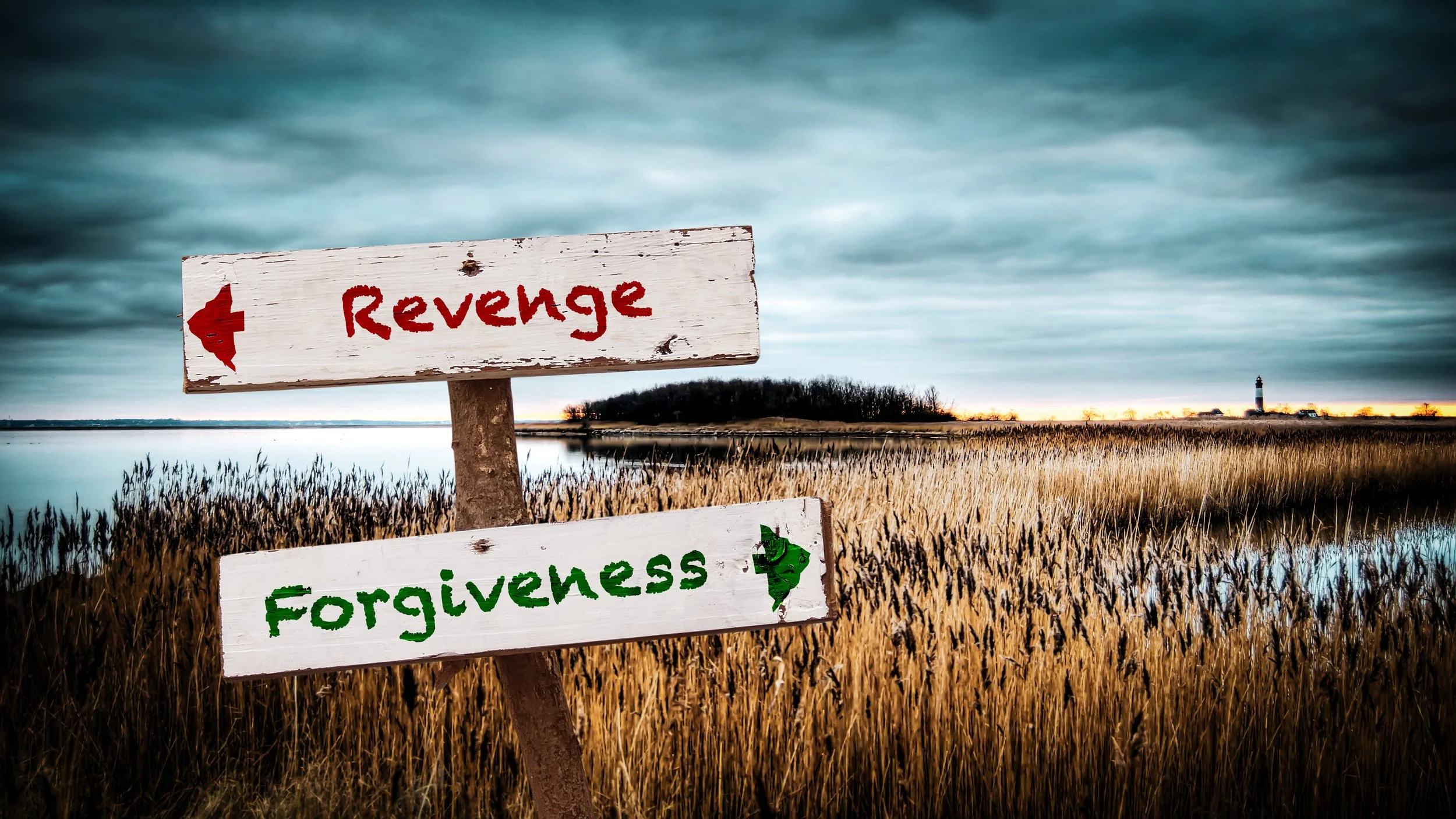
I Had to Stop Asking, “How Will I Get Even?”

For a long time, my thoughts were focused on what I could do to make things fair.

But eventually, I realized that I was allowing people who had already taken so much from my family to continue taking something else:

my peace.

I didn't want to spend the rest of my life thinking about them.

I didn't want my children to see an angry and spiteful mother.

I didn't want my husband and I to build our future around everything that happened in our past.

Most importantly, I didn't want bitterness to become part of who I was.

I had to surrender that to God.

Scripture tells us, “Do not be overcome by evil, but overcome evil with good.” — Romans 12:21.

That verse became more meaningful to me as I began understanding that overcoming evil does not always mean winning an argument, receiving an apology, or seeing someone else punished.

Sometimes overcoming means refusing to let what happened to you determine who you become.

Choosing Peace Does Not Mean Pretending

I want to be clear about something.

Choosing peace does not mean pretending that everything is okay.

It does not mean forgetting.

It does not mean denying the hurt.

There are things that happened to my family that I will probably always remember.

There are things I still don't understand.

There are questions I still have.

There are moments when anger still comes back.

But I am learning that I can acknowledge those feelings without allowing them to control my decisions.

I can say, “That hurt me,” without allowing the hurt to become hatred.

I can say, “That was wrong,” without spending my life plotting revenge.

I can want justice while still asking God to heal my heart.

That distinction has brought me freedom.

Forgiveness, to me, is becoming less about pretending something never happened and more about releasing my need to personally carry the burden of revenge.

Forgiveness does not mean saying that what someone did was acceptable.

It does not mean trusting someone again.

It does not mean allowing someone continued access to you or your children.

It does not mean abandoning healthy boundaries.

And it does not mean that justice should not matter.

Sometimes forgiveness simply means saying, “God, I cannot carry this anymore. I give this to You.”

What I Am Learning to Replace Bitterness With

Instead of constantly thinking about what I wish had happened differently, I am trying to think about what I want my future to look like.

I want peace.

I want joy.

I want my family to heal.

I want my children to know that difficult seasons do not have to define their entire lives.

I want my husband and I to continue growing together.

I want to be able to look back one day and know that although this season hurt us deeply, it did not destroy who we were.

And I want my children to see that their mother chose healing.

I am learning that I have to be intentional about what I allow to occupy my mind.

When negative thoughts come, I can acknowledge them without feeding them.

When anger rises, I can pray.

When I feel tempted to replay the past, I can remind myself that my future deserves my attention too.

I can think about the family I am praying for.

I can think about the memories I hope we will make.

I can think about the person I want to become.

I can think about the blessings that may still be ahead.

That doesn't erase what happened.

It simply means what happened doesn't get to have the final word.

God Can Make a Way Without Making Me Bitter

We are still in the process.

Our story is not finished.

There are still things we are waiting for, praying about, and hoping for.

But I have begun to understand that I don't have to wait until everything is resolved before I begin living again.

I can experience joy while I am waiting.

I can love while I am hurting.

I can pray while I am uncertain.

I can hope while I don't know exactly what tomorrow will bring.

And I can choose peace even when I have every reason to be angry.

I don't know exactly what the future will look like, but I believe God is making a way for my family.

I believe He is strengthening us.

I believe He is working in my children, my husband, and me.

And I believe that the future I am praying for is worth protecting—not just from outside circumstances, but from the bitterness that could grow inside of me if I allow it.

I am still learning.

I am still healing.

I am still choosing.

And every day, I want to choose the woman, wife, mother, and person God is calling me to become—not the person my pain could have turned me into.

Because I don't want bitterness to be the legacy of this season.

I want faith to be.

I want love to be.

I want peace to be.

I want healing to be.

And above all, I want to be able to look back someday and say:

What happened to me was painful, but it did not get to decide who I became.

A Prayer for Releasing Bitterness

God,

You know every hurt I carry, including the ones I have never been able to put into words.

You know the anger, the disappointment, the betrayal, and the moments when I have wanted people who hurt me to experience the same pain they caused.

Help me release what I was never meant to carry forever.

Give me wisdom to know the difference between forgiveness and allowing harm.

Help me maintain healthy boundaries without hatred.

Help me pursue justice without becoming consumed by revenge.

Heal the places in my heart that still hurt.

Replace bitterness with peace, anger with wisdom, and fear with faith.

Help me become the person You created me to be—not a reflection of the people who have hurt me, but a reflection of Your love and grace.

Protect my family.

Strengthen my husband and my children.

Help us continue moving forward, even while some parts of our story remain unfinished.

And when I am tempted to look backward with anger, remind me to look forward with hope.

I trust You with the things I cannot control.

I trust You with justice.

I trust You with my family.

And I trust You with my heart.